Morehouse Prof Backs Valedictorian's Choice
Story Highlights
- Should a white man be valedictorian of an HBCU?
- Why would Joshua Packwood choose Morehouse and not Harvard?
By Stephane Dunn, PhD on May 24, 01:44 PM
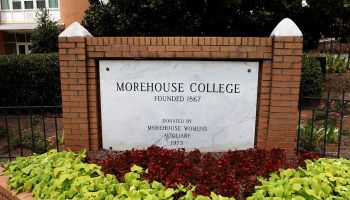
The calls started early in the week before Morehouse's graduation ceremony and increased after snippets of it appeared on national television. I saw your school on CNN and Fox News, they'd say. "Got the white boy all over TV like that's the most outstanding thing ever to happen at Morehouse."
The 'white boy' of course is Joshua Packwood, the valedictorian for Morehouse's class of 2008.
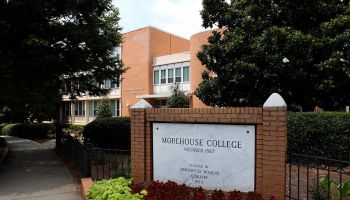
Since I teach at Morehouse, folks I know have made it a point to offer their opinions on the 'historic' event. I must confess, I was a bit surprised by it myself since one can indeed go for weeks at a time and not encounter a young white man on campus.
I wasn't shocked, however. No one familiar with Packwood's outstanding social and scholastic achievements and his heartfelt speech on Sunday would find his valedictorian status surprising at any institution.
Some of the internal conversation at Morehouse and within the black community has centered on the question of whether a young white man should be valedictorian of historically black Morehouse and what it says about the school.
And there's another disturbing question which has become the center of media attention about Packwood's presence at Morehouse: Why would a stellar, white male student with Ivy League attention and potential choose Morehouse?
But there is a better question: Why not Morehouse?
The school was not created to bar young white men, imply the inferiority of the former, or to segregate on the virtue of race but rather to answer a call that the racist structure of America did not allow for black men: the right to an education and support of that cause.
Morehouse went on to become defined by legendary men of letters like fourth president Dr. John Hope, a Phi Beta Kappa Brown University graduate, and the great Dr. Benjamin E. Mays, the sixth president and visionary leader of Morehouse.
Under his tutelage, Morehouse defined itself further as a unique, powerful training ground for some of the most impressive men ever to shape American culture.
Among them, of course, came an American who many across racial and class lines might name the greatest or at least most influential American of the twentieth century--Dr. Martin Luther King, Jr. In addition to King, Morehouse can claim a few more well-known names, including Spike Lee and Samuel L. Jackson and thousands of successful men in virtually every field.
Yet, in a graduation address in which "brethren" was the most oft-repeated word, Joshua Packwood provided the more compelling support for why it's unnecessary and indeed disrespectful to situate the significance of this historic moment on why a young white man would choose a Morehouse instead of a Harvard.
He spoke of a late freshman night when he and more than five hundred newcomers were suddenly awakened by upper class men and led to some of the most sacred spots on campus. Packwood spoke of standing before the statue of King and then of Mays.
The ritual stressed the awesome legacy of Morehouse and the expectation that each young man strive to live up to that privilege and burden. Obviously, Packwood took the inspiration to heart and set about proving that he, not the school, was worthy of that privilege.
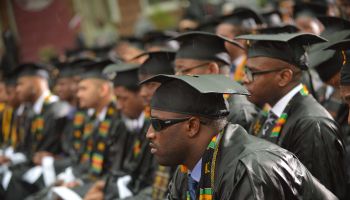
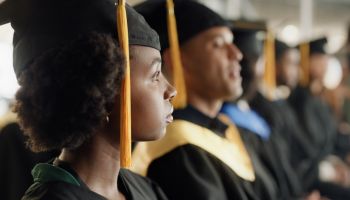
Sitting through my first Morehouse graduation and my first as a professor, I got the chills, and the cool breeze wasn't the sole cause. It started with the drums that led off the processional and didn't end until after the award winning glee club led the national anthem and 'Lift Every Voice and Sing' until still after when Josh Packwood, emotion charging his voice, explained his success and answered why not Morehouse in unity with his five hundred strong brethren.
This is not the few seconds of his speech that is being replayed in the ten second news spotlights.
He didn't use his own words--no need with the shadow and words of giant men engraved in stone and spirit in the heart of the college:
"It is expected that the student who enters here will do well. It is also expected that once a man bears the insignia of a Morehouse graduate, he will do exceptionally well... May you perform so well that when a man is needed for an important job in your field, your work will be so impressive that the committee of selection will be compelled to examine your credentials... Let no man dismiss you with the wave of a hand or a shrug of the shoulder..."
So Joshua Packwood chose something many of us yearn for and students everywhere need: quality and inspiration.
Stephane Dunn is a visiting assistant professor of English at Morehouse College and the author of Baad Bitches" and Sassy Supermamas: Black Power Action Films (University of Illinois Press, 2008)


Add to Technorati